Access Course Humanities and Social Science Success

 88%
88%
- SALE Savings End Midnight Tuesday 14th July
- SALE Savings End Midnight Tuesday 14th July
Access to Humanities and Social Sciences – Humanities Pathway
Your Course at a Glance
- University entry without A-Levels
- Degrees in sociology, psychology & more
- Prepares for university study
- Online study at home
- Dedicated tutor support
- No exams
About Your Diploma
Gain essential skills for degrees in sociology, history, and more. Equivalent to 3 A-Levels, it's a strong alternative for university entry.
Explore human behaviour, historical events, and critical societal issues, developing vital analytical skills.
What Happens After Your Course?
Turn your diploma into a degree
Our Progression Service helps you explore options and apply to university

Getting Started
Your Individual Learning Plan (ILP) guides your study schedule. Study online with instant course material access, supported by tutors and a dedicated team.
Complete your diploma in under a year, with flexibility to study at your own pace.
Modules
Unit 1: Academic Writing Skills
Upon successful completion of this module, you will:
- Be able to structure a written response
- Be able to develop a structured response to a plan
- Be able to present the response appropriately for audience and purpose
- Understand how to apply academic writing principles to own work
Unit 2: Reading and Note Making
Upon successful completion of this module, you will:
- Understand a range of reading strategies
- Understand the use of language in terms of the purpose and context of a range of texts
- Be able to use methods for developing notes from a range of sources
Unit 3: Perspectives in Psychology
Upon successful completion of this module, you will:
- Understand different psychological perspectives
- Understand the differences between alternative psychological perspectives
- Be able to apply psychological perspectives to contemporary issues in psychology
Unit 4: Crime and Society
Upon successful completion of this module, you will:
- Understand crime and deviance
- Understand crime statistics
- Be able to evaluate theoretical explanations of crime
- Know social and cultural patterns of crime and criminality
Unit 5: Industrialisation in Britain
Upon successful completion of this module, you will:
- Understand the conditions which encouraged industrialisation in Britain
- Understand perspectives on the causes of industrialisation
- Understand the effects of industrialisation on the nature of industrial work practices
Unit 6: Literature: Shakespeare
Upon successful completion of this module, you will:
- Understand the interpretative nature of text and performance
- Be able to discuss text using relevant literary terminology
- Understand theatrical conventions
- Understand the significance of cultural, social, and historical influences on both producers and audiences
Unit 7: Biopsychology: Behaviour and the Brain
Upon successful completion of this module, you will:
- Understand the concept of localisation of function
- Be able to evaluate methods of investigating the relationship between the brain and behaviour
- Understand the interaction between the brain and behaviour
Unit 8: Social and Economic Change in 19th Century Britain
Upon successful completion of this module, you will:
- Understand agricultural change and the development of industrialisation in 19th century Britain
- Understand the causes and effects of rapid urban growth in the 19th century Britain
- Understand the development of social and political protect in 19th century Britain
Unit 9: Analysing Short Stories
Upon successful completion of this module, you will:
- Understand the skills needed to analyse short stories
- Understand the significance of context in short stories
- Understand how literary criticism can be used to develop a response to short stories
Unit 10: Biopsychology: Behaviour and Drugs
Upon successful completion of this module, you will:
- Know how neurotransmitters in the brain control behaviour
- Understand the effects of psychoactive drugs on behaviour
- Be able to evaluate the role of drugs in the treatment of psychological disorders
Unit 11: Current Issues in Criminology
Upon successful completion of this module, you will:
- Understand and apply key concepts in criminology to two topic areas
- Be able to analyse different approaches to crime issues
- Be able to assess the usefulness of different theories of crime for understanding to two topic areas
Unit 12: Literature: The Novel
Upon successful completion of this module, you will:
- Understand structure and plot within the novel
- Understand themes in the novel
- Understand the use of language in the novel
- Understand the significance of characterisation within the novel
- Understand the significance of setting within the novel
- Understand the significance of the various contexts within which novels are written
- Be able to apply a critical perspective to a novel
Unit 13: Political Ideologies
On completion of this unit you will:
- Understand the various definitions of politics
- Understand a range of political theoretical perspectives
- Understand the relevance of a range of political ideologies and theories to contemporary political issues
Unit 14: Poverty in Contemporary Britain
Upon successful completion of this module, you will:
- Be able to evaluate definitions and theoretical explanations of poverty
- Understand the historical context and changes in poverty in Britain
- Understand the different methods used to measure poverty
- Be able to evaluate recent policies for tackling poverty in Britain
Unit 15: Human Rights
Upon successful completion of this module, you will:
- Understand the development of human rights
- Know the Rights protected by the Human Right Act 1998
- Be able to evaluate impact of the Human Rights Act 1998
In addition to the qualification units, you will also be required to complete a course induction which comprises of three short introductory tasks to support the development of your academic study skills.
Entry Requirements
To study an Access to HE Diploma you must be resident in the UK and have a UK postcode.
You must hold Level 2 qualifications in both English and Maths, or be working towards them alongside studying your Access to Higher Education Diploma.
University Entry Criteria
It must be reiterated that each university will set its own admission criteria. So, you must check with your desired institution if your Access to HE Diploma and other qualifications will be accepted. In many cases, to get started at university you will need: - A certain number of credits passed with a merit or a distinction grade - A face-to-face interview at the university - Literacy and numeracy assessments provided by the university - Course-related work placements or work experience - GCSE Grade C/4 or above in Maths and English (or equivalent Level 2 such as Functional Skills/Key Skills, etc.) It is your responsibility to check that your Access to HE Diploma will be accepted as part of these entry requirements for your chosen degree. learndirect will not be held accountable if completing this Access to Higher Education Diploma doesn’t secure you a position with a higher education institution.
Minimum Age Restriction
Access to HE Diplomas are designed to support students to progress to university who have substantial experience of life outside of formal education which they have gained since completing compulsory schooling.
Average Completion Timeframe
The average time it takes our learners to complete the course is 9-12 months.
Assessment Requirements
A range of assessment methodologies are used, including: essay, scenario analysis, illustrated report, experiment, presentation (video and audio recording), series of questions, academic writing skills tasks.
In addition to the qualification units, you will also be required to complete a course induction which comprises of three short introductory tasks to support the development of your academic study skills.
Exams Required
There are no exams included in the assessment of the course.
Is Membership Required?
No membership is required to enrol on this course.
Additional Requirements
Learners must be actively studying for a minimum of six months before results can be ratified and certificates ordered. The six month period does not start until you have completed and passed the course induction and you must be submitting assignments regularly (in line with the deadlines in your Individual Learning Plan) to meet this six month requirement. Certificates can only be issued once your course is paid for in full.
Certification Timeframe
You can expect to receive your certificate 12-16 weeks from your final assignment being marked and graded, depending on the time of year. You will be provided with regular updates throughout the certification process so that you are fully informed of your individual timeframes.
Course Fees
All course fees, inclusive of all payment plans including our Premium Credit Limited option, must be settled before certification can be ordered.
*You will have access to the course for 24 months.
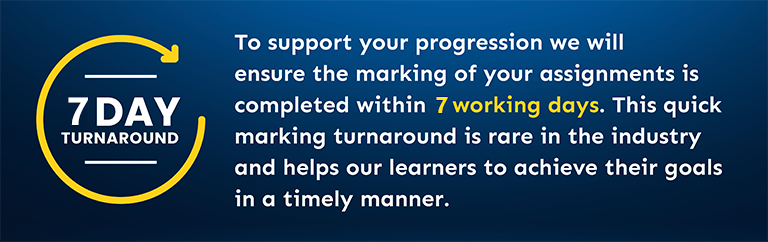
A range of units make up this qualification, with an assignment at the end of each. You will submit your work to your tutor for marking and tailored feedback. You must acquire 60 credits in total in order to achieve the Access to Humanities and Social Sciences – Humanities Pathway. Of these credits, 45 will be taken from graded units which focus on the academic subject areas included in the course. The remaining 15 come from ungraded units included to help you to improve your academic writing and study skills.
In addition to the qualification units, you will also be required to complete a course induction which comprises of three short introductory tasks to support the development of your academic study skills.
As part of your programme, you will also receive help as well as guidance on your university application and the research you need to do to get the most out of your diploma.
Skills & Education Group Access
On successful completion of the Access to Humanities and Social Sciences – Humanities Pathway, (QAA aim code: 40012888), you will receive a Skills & Education Group Access, QAA recognised, Access to Higher Education Diploma at Level 3. As part of your programme, you will also receive help as well as guidance on your university application and the research you need to do to get the most out of your diploma.
An access validating agency with a strong social purpose to recognise achievement, particularly for those who have benefited least from their previous educational experiences, Skills and Education Group Access supports the needs of learners, providers, businesses and communities by enabling progression into higher education.
Career
With this diploma, pursue degrees in politics, criminology, or psychology. Gain skills valued by employers, preparing you for diverse career paths in humanities and social sciences.
Further Qualifications and Prospects
Advance your career with further qualifications. For teaching, gain QTS; for psychology, a postgraduate degree may be needed. This diploma is your starting point.
Frequently Asked Questions
- SALE Savings End Midnight Tuesday 14th July
- SALE Savings End Midnight Tuesday 14th July
Access to Humanities and Social Sciences – Humanities Pathway
Your Course at a Glance
- University entry without A-Levels
- Degrees in sociology, psychology & more
- Prepares for university study
- Online study at home
- Dedicated tutor support
- No exams
About Your Diploma
Gain essential skills for degrees in sociology, history, and more. Equivalent to 3 A-Levels, it's a strong alternative for university entry.
Explore human behaviour, historical events, and critical societal issues, developing vital analytical skills.
What Happens After Your Course?
Turn your diploma into a degree
Our Progression Service helps you explore options and apply to university
Getting Started
Your Individual Learning Plan (ILP) guides your study schedule. Study online with instant course material access, supported by tutors and a dedicated team.
Complete your diploma in under a year, with flexibility to study at your own pace.
Modules
Unit 1: Academic Writing Skills
Upon successful completion of this module, you will:
- Be able to structure a written response
- Be able to develop a structured response to a plan
- Be able to present the response appropriately for audience and purpose
- Understand how to apply academic writing principles to own work
Unit 2: Reading and Note Making
Upon successful completion of this module, you will:
- Understand a range of reading strategies
- Understand the use of language in terms of the purpose and context of a range of texts
- Be able to use methods for developing notes from a range of sources
Unit 3: Perspectives in Psychology
Upon successful completion of this module, you will:
- Understand different psychological perspectives
- Understand the differences between alternative psychological perspectives
- Be able to apply psychological perspectives to contemporary issues in psychology
Unit 4: Crime and Society
Upon successful completion of this module, you will:
- Understand crime and deviance
- Understand crime statistics
- Be able to evaluate theoretical explanations of crime
- Know social and cultural patterns of crime and criminality
Unit 5: Industrialisation in Britain
Upon successful completion of this module, you will:
- Understand the conditions which encouraged industrialisation in Britain
- Understand perspectives on the causes of industrialisation
- Understand the effects of industrialisation on the nature of industrial work practices
Unit 6: Literature: Shakespeare
Upon successful completion of this module, you will:
- Understand the interpretative nature of text and performance
- Be able to discuss text using relevant literary terminology
- Understand theatrical conventions
- Understand the significance of cultural, social, and historical influences on both producers and audiences
Unit 7: Biopsychology: Behaviour and the Brain
Upon successful completion of this module, you will:
- Understand the concept of localisation of function
- Be able to evaluate methods of investigating the relationship between the brain and behaviour
- Understand the interaction between the brain and behaviour
Unit 8: Social and Economic Change in 19th Century Britain
Upon successful completion of this module, you will:
- Understand agricultural change and the development of industrialisation in 19th century Britain
- Understand the causes and effects of rapid urban growth in the 19th century Britain
- Understand the development of social and political protect in 19th century Britain
Unit 9: Analysing Short Stories
Upon successful completion of this module, you will:
- Understand the skills needed to analyse short stories
- Understand the significance of context in short stories
- Understand how literary criticism can be used to develop a response to short stories
Unit 10: Biopsychology: Behaviour and Drugs
Upon successful completion of this module, you will:
- Know how neurotransmitters in the brain control behaviour
- Understand the effects of psychoactive drugs on behaviour
- Be able to evaluate the role of drugs in the treatment of psychological disorders
Unit 11: Current Issues in Criminology
Upon successful completion of this module, you will:
- Understand and apply key concepts in criminology to two topic areas
- Be able to analyse different approaches to crime issues
- Be able to assess the usefulness of different theories of crime for understanding to two topic areas
Unit 12: Literature: The Novel
Upon successful completion of this module, you will:
- Understand structure and plot within the novel
- Understand themes in the novel
- Understand the use of language in the novel
- Understand the significance of characterisation within the novel
- Understand the significance of setting within the novel
- Understand the significance of the various contexts within which novels are written
- Be able to apply a critical perspective to a novel
Unit 13: Political Ideologies
On completion of this unit you will:
- Understand the various definitions of politics
- Understand a range of political theoretical perspectives
- Understand the relevance of a range of political ideologies and theories to contemporary political issues
Unit 14: Poverty in Contemporary Britain
Upon successful completion of this module, you will:
- Be able to evaluate definitions and theoretical explanations of poverty
- Understand the historical context and changes in poverty in Britain
- Understand the different methods used to measure poverty
- Be able to evaluate recent policies for tackling poverty in Britain
Unit 15: Human Rights
Upon successful completion of this module, you will:
- Understand the development of human rights
- Know the Rights protected by the Human Right Act 1998
- Be able to evaluate impact of the Human Rights Act 1998
In addition to the qualification units, you will also be required to complete a course induction which comprises of three short introductory tasks to support the development of your academic study skills.
Entry Requirements
To study an Access to HE Diploma you must be resident in the UK and have a UK postcode.
You must hold Level 2 qualifications in both English and Maths, or be working towards them alongside studying your Access to Higher Education Diploma.
University Entry Criteria
It must be reiterated that each university will set its own admission criteria. So, you must check with your desired institution if your Access to HE Diploma and other qualifications will be accepted. In many cases, to get started at university you will need: - A certain number of credits passed with a merit or a distinction grade - A face-to-face interview at the university - Literacy and numeracy assessments provided by the university - Course-related work placements or work experience - GCSE Grade C/4 or above in Maths and English (or equivalent Level 2 such as Functional Skills/Key Skills, etc.) It is your responsibility to check that your Access to HE Diploma will be accepted as part of these entry requirements for your chosen degree. learndirect will not be held accountable if completing this Access to Higher Education Diploma doesn’t secure you a position with a higher education institution.
Minimum Age Restriction
Access to HE Diplomas are designed to support students to progress to university who have substantial experience of life outside of formal education which they have gained since completing compulsory schooling.
Average Completion Timeframe
The average time it takes our learners to complete the course is 9-12 months.
Assessment Requirements
A range of assessment methodologies are used, including: essay, scenario analysis, illustrated report, experiment, presentation (video and audio recording), series of questions, academic writing skills tasks.
In addition to the qualification units, you will also be required to complete a course induction which comprises of three short introductory tasks to support the development of your academic study skills.
Exams Required
There are no exams included in the assessment of the course.
Is Membership Required?
No membership is required to enrol on this course.
Additional Requirements
Learners must be actively studying for a minimum of six months before results can be ratified and certificates ordered. The six month period does not start until you have completed and passed the course induction and you must be submitting assignments regularly (in line with the deadlines in your Individual Learning Plan) to meet this six month requirement. Certificates can only be issued once your course is paid for in full.
Certification Timeframe
You can expect to receive your certificate 12-16 weeks from your final assignment being marked and graded, depending on the time of year. You will be provided with regular updates throughout the certification process so that you are fully informed of your individual timeframes.
Course Fees
All course fees, inclusive of all payment plans including our Premium Credit Limited option, must be settled before certification can be ordered.
*You will have access to the course for 24 months.
Assessment
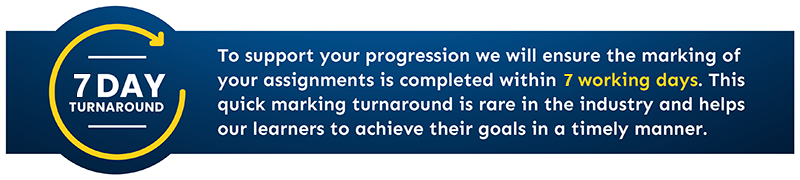
A range of units make up this qualification, with an assignment at the end of each. You will submit your work to your tutor for marking and tailored feedback. You must acquire 60 credits in total in order to achieve the Access to Humanities and Social Sciences – Humanities Pathway. Of these credits, 45 will be taken from graded units which focus on the academic subject areas included in the course. The remaining 15 come from ungraded units included to help you to improve your academic writing and study skills.
In addition to the qualification units, you will also be required to complete a course induction which comprises of three short introductory tasks to support the development of your academic study skills.
As part of your programme, you will also receive help as well as guidance on your university application and the research you need to do to get the most out of your diploma.
Qualifications
Skills & Education Group Access
On successful completion of the Access to Humanities and Social Sciences – Humanities Pathway, (QAA aim code: 40012888), you will receive a Skills & Education Group Access, QAA recognised, Access to Higher Education Diploma at Level 3. As part of your programme, you will also receive help as well as guidance on your university application and the research you need to do to get the most out of your diploma.
An access validating agency with a strong social purpose to recognise achievement, particularly for those who have benefited least from their previous educational experiences, Skills and Education Group Access supports the needs of learners, providers, businesses and communities by enabling progression into higher education.
Career
With this diploma, pursue degrees in politics, criminology, or psychology. Gain skills valued by employers, preparing you for diverse career paths in humanities and social sciences.
Further Qualifications and Prospects
Advance your career with further qualifications. For teaching, gain QTS; for psychology, a postgraduate degree may be needed. This diploma is your starting point.
Frequently Asked Questions
88%
Available from as little as

learning
learning hours
Rated by our learners
Rated Excellent by our learners
4.5 out of 5 TrustpilotBased on 31,091 Trustpilot reviews
Read all reviews →Take the next step in your learning journey
Course tips, career advice and exclusive offers, straight to your inbox. No spam, just guidance.
Accredited & trusted
Working with the UK's leading awarding bodies