Computing Online Degree Pathway


- SALE Savings End Midnight Friday 27th November
- SALE Savings End Midnight Friday 27th November
Computing Online Degree Pathway
This Course at a Glance
- Globally recognised online alternative to Year 1 and Year 2 of university
- Get on the pathway to obtaining a BSc (Hons) Computer Networks and Security
- In partnership with international awarding organisation ATHE
- Complete Year 3 at one of our preferred universities
- Flexible online study in Year 1 and 2 rather than on-campus lectures
- Get on the fast track to your university qualification
- Avoid rising loan repayment fees
- Save on expensive living costs associated with on-campus study
Achieving a degree in computing or a relevant subject can propel you towards a range of careers in the ever-evolving digital industry, such as cyber security, data science and more. With our Computing Online Degree Pathway, which consists of the first and second years of a degree, removing in-person lectures and restrictive timetables, you have the option to complete Year 1 and Year 2 faster than at university.
About Your Online Degree Pathway
This undergraduate online degree pathway in computing is made up of 240 credits and is designed as an online alternative to completing Year 1 and Year 2 at university. Studying with us will fast-track you to the final year of an associated Honours degree, which can be completed at our preferred university.
This has been made possible through our partnership with ATHE, an Ofqual-regulated global awarding organisation that spans more than 55 countries worldwide. ATHE partners with 25 UK and international universities, providing top-up degrees to learners seeking an alternative to traditional university learning.
The course is delivered online, through an engaging array of online learning materials. So, you will find your education both interesting and rewarding. As a self-paced online course, you can also work towards your qualification without pressure, around your existing commitments.
What Will You Learn?
The course will give you a comprehensive foundation of knowledge and skills, preparing you for diverse roles in the IT industry, such as programming and scripting, system analysis, design and problem-solving, and much more. Upon completion, you will possess a profound understanding of IT principles, applicable across various business environments.
As the online degree pathway progresses, you will cultivate skills relating to data, data structure, and databases. Additionally, you will delve into the realm of legislation, regulation, ethics and codes of practice, gaining insights into a vast scope of areas that are essential for a successful career in the IT space.
University Progression
Upon successful completion of Year 1 and Year 2 with us, you can apply to progress to Year 3 of a relevant undergraduate degree with one of our university partners. Entry is subject to each university's admission requirements. You can find details of these on our progressions tab.
The fees for your third year are an additional cost and are paid separately to the university.
Study for a Degree Without Expensive Fees
If you want to get a head-start on your degree without having to commit to loan fees, then our Computing Online Degree Pathway is for you, as it covers Year 1 and Year 2. This programme is ideal for those of you who can’t commit to full-time study on a university campus, and you’d rather not pay nearly £30,000 in tuition fees! This programme offers a convenient home-based alternative to the initial two years of university study.
With the flexibility of online learning, you can bypass the constraints of fixed classes and timetables, enabling you to progress at your pace through the course materials. This newfound freedom empowers learners to reach their final year of university potentially faster compared to traditional campus-based study.
A More Affordable Alternative
The latest change in student finance rules will see university graduates doubling their student loan repayments. This is in addition to repaying their student loans when they earn an annual salary of £25,000, instead of the £27,660 it was before.
With inflation and interest rates rising in the UK due to the ongoing cost of living crisis, university graduates are affected. For the 2022/23 academic year, there was a risk of student loan interest rates reaching 12%, further hitting the pockets of students.
Due to the current economic uncertainty, a university graduate could end up with an average of £42,900 of student loan debt, with tuition fees costing an average of £9,250 per year.
According to YouGov, 37% of people feel that current tuition fees are unfair, so it’s no surprise that many are looking for alternative options. Here at learndirect, we can offer you an affordable alternative that covers the first and second year of a degree for a fraction of the cost of the traditional route.
Please note, the fee for the third (top-up) year of your degree is set and charged by your chosen university, not by learndirect. Fees vary between universities and between online and on-campus study, so please check the current fee with the university before you apply.
Avoid Rise in Daily Living Costs
Our online degree pathway also helps you skip the other associated costs of a full-time university. By completing Year 1 and Year 2 online at home, there will be no student housing costs or travel expenses. You will also have the flexibility to integrate studying into your lifestyle without rearranging your existing commitments. So, if you’re currently working, you won’t have to give that up to get your degree.
Modules
Year 1 consists of eleven units
Unit 1: Legislation, Regulation, Ethics and Codes of Practice
Upon completion of this unit, you will:
- Understand current legal and regulatory issues in IT
- Understand current ethical issues in IT
- Understand the need to create organisational policies and procedures
- Understand the role of professional bodies and industry certification in maintaining professional standards in industry
Unit 2: IT Systems Development: Preparation, Analysis, Design and Problem-Solving
Upon completion of this unit, you will:
- Understand the stages and purpose of the lifecycle and lifecycle models in development activities
- Understand the key behaviours needed to develop achievable requirements
- Can use analysis techniques to investigate and document an existing system
- Can identify, design, and document a possible solution
- Can present a solution proposal to a client
Unit 3: Programming and Scripting
Upon completion of this unit, you will:
- Understand principles of computer programming
- Can design a computer program to a client brief with a consideration of the user interface
- Can develop a computer program to a client brief
- Can test and evaluate a computer program
Unit 4: Data and Database Systems
Upon completion of this unit, you will:
- Understand what is meant by data
- Understand database design
- Design a database system
Unit 5: Computer Systems, Networks and Security
Upon completion of this unit, you will:
- Understand enabling principles
- Understand hardware and software
- Understand the risks to computer systems and data
Unit 6: Data Preparation and Quality Risks
Upon completion of this unit, you will:
- Can undertake basic data extraction and manipulation with SQL queries
- Understand common approaches to combining data from different sources
- Understand quality risks inherent in data and how to mitigate or resolve these
Unit 7: Organisational Data Architecture
Upon completion of this unit, you will:
- Understand the principles of organisational data architecture
- Understand a common data analysis lifecycle of their choice
- Understand a simple entity-relationship model
Unit 8: Web Design and Programming
Upon completion of this unit, you will:
- Understand principal technologies and components used to build, host and access websites
- Can apply the principles of client-side development
- Can apply the principles of server-side development
Unit 9: Mobile Applications Development
Upon completion of this unit, you will:
- Understand the user experience
- Can design and develop mobile apps to meet a client brief
- Can test and publish mobile apps
Unit 10: Cyber Security Concepts
Upon completion of this unit, you will:
- Understand cyber security concepts
- Understand risks and how to respond to cyber incidents
- Understand client security requirements to derive security objectives
Unit 11: Synoptic Computing Project
Upon completion of this unit, you will:
- Can identify and investigate a business problem or opportunity that could benefit from a computing solution
- Can use appropriate tools to design a solution and plan its implementation and testing
- Can demonstrate an understanding of professional best practice
Year 2 consists of eight units.
Unit 1: Computing Projects for Digital Transformation
Upon completion of this unit, you will:
- Understand opportunities and drivers for digital transformation
- Understand risks associated with digital transformation
- Understand how risks associated with digital transformation are mitigated
Unit 2: Professional Development and Business Communication
Upon completion of this unit, you will:
- Understand the role of Continuous Professional Development (CPD) in the professional development of IT practitioners
- Understand the factors that contribute to different types of communication and the reputational impact of good business communication
- Understand how to communicate at a level that is appropriate to the target audience, particularly with senior management
- Understand how barriers to communication can be overcome to support users as customers
Unit 3: Innovative Technologies and Connected Devices
Upon completion of this unit, you will:
- Understand innovative developments in technology
- Understand the impact of technological innovations on the computer industry
- Understand the impact of technological innovations on society
Unit 4: Information Systems
Upon completion of this unit, you will:
- Understand different types of information systems that are used in an organisation
- Understand the principal uses, advantages and disadvantages of information systems
- Understand how organisations use information systems to support strategic and operational decisions
Unit 5: Advanced Database Practice
Upon completion of this unit, you will:
- Understand advanced relational database concepts
- Understand and carry out definition and manipulation of database objects
- Understand the structure and function of database objects
Unit 6: Advanced Programming
Upon completion of this unit, you will:
- Understand the importance of implementing SOLID principles on the OOP paradigm
- Understand the importance of DevSecOps as a set of practices, cultural approaches, and tools in software development
- Can design, build and test a large dataset application using SOLID principles, clean coding techniques, and automated testing
Unit 7: Network Developer and IT Operations (NetDevOps)
Upon completion of this unit, you will:
- Understand the skills needed to plan and code complex network systems
- Understand the skills needed to build and test complex network systems
- Can implement the deployment and subsequent monitoring of complex network infrastructure
Unit 8: Advanced Project
Upon completion of this unit, you will:
- Understand the tools and techniques of IT project management
- Understand risk and risk mitigation in relation to IT projects
- Understand how and why projects are reviewed and how learning from project reviews is embedded into future practice
Entry Requirements
This qualification is designed for learners who are typically aged 18 and above, and have completed compulsory schooling.
The entry profile for learners is likely to include at least one of the following:
- A minimum of 2 A-levels
- A Level 3 qualification in the relevant subject area such BTEC Level 3 Diploma
- An Access to Higher Education Diploma
- Equivalent international qualifications
The level 3 qualification must be supported by a minimum of GCSE in English and Maths (or equivalent). Students can enrol if they are working towards these qualifications alongside their studies.
Mature learners may present a more varied profile of achievement that is likely to include relevant work experience (paid and/or unpaid) with levels of responsibility, participation and/or achievement of relevant professional qualifications.
Learners must also have an appropriate standard of English to enable them to access relevant resources and complete the unit assignments. For those whom English is not their first language we recommend the following standards of proficiency in English language skills or an approved equivalent for this qualification:
- IELTs 5.5
- Common European Framework of Reference (CEFR) B2
- Cambridge English Advanced (CAE) 162 or above
- Pearson Test of English (PTE) Academic 42-49
Minimum Age Restriction
These qualifications are designed for learners aged 18 and older.
Average Completion Timeframe
Each ATHE Extended Diploma is 120 credits, with a Total Qualification Time (TQT) of 1,200 hours. Full pathways include two Extended Diplomas, totalling 240 credits (2,400 hours TQT). You'll have access to your course for 24 months.
Assessment Requirements
There are no exams included in this study programme, instead, you will complete several written assignments.
Course Fees
All course fees, inclusive of all payment plans including our Premium Credit Limited option, must be settled before certification can be ordered.
*You will have access to the course for 24 months.
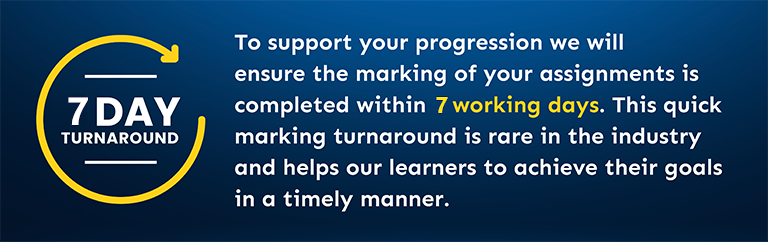
You will complete a series of assignments to demonstrate that you have successfully achieved the learning outcomes of each unit.
ATHE

Upon successful completion of this online course, you will achieve two globally recognised ATHE qualifications:
- ATHE Level 4 Extended Diploma in Computing, qual aim 610/3264/5, 120 credits
- ATHE Level 5 Extended Diploma in Computing, qual aim 610/3715/1, 120 credits
Awards for Training and Higher Education (ATHE) is a global awarding organisation regulated by Ofqual and other United Kingdom and international regulators.
ATHE is a global awarding organisation regulated by Ofqual and other UK and international regulators since 2011. They work with more than 280 recognised centres in over 55 countries to complement our strong brand presence in the UK.
Once you have successfully achieved this Computing Online Degree Pathway, you can progress to the final year of an undergraduate degree in computing, information technology, computer science, or a related subject, at an array of UK universities.
After finishing a degree programme at an accredited UK university, you will be qualified to pursue a career in IT within the public or private sector.
The primary areas of employment include:
- IT Consultant
- Software Engineer
- Web Developer
- IT Technician
- Cloud Architect
- Systems Analyst
- Network Engineer
For more insight on what your degree could lead to, click here.
Frequently Asked Questions


Arden is known for its practical course content, supportive tutors, and career-relevant skills development. You’ll experience interactive online learning alongside opportunities for networking and real-world application. With a range of financial support options and personalised guidance from learndirect’s Progressions Team, Arden University makes achieving your degree goals more accessible than ever.
Ready to advance your education and career prospects? Contact us to learn more about progressing to Arden University through learndirect.


- SALE Savings End Midnight Friday 27th November
- SALE Savings End Midnight Friday 27th November
Computing Online Degree Pathway
This Course at a Glance
- Globally recognised online alternative to Year 1 and Year 2 of university
- Get on the pathway to obtaining a BSc (Hons) Computer Networks and Security
- In partnership with international awarding organisation ATHE
- Complete Year 3 at one of our preferred universities
- Flexible online study in Year 1 and 2 rather than on-campus lectures
- Get on the fast track to your university qualification
- Avoid rising loan repayment fees
- Save on expensive living costs associated with on-campus study
Achieving a degree in computing or a relevant subject can propel you towards a range of careers in the ever-evolving digital industry, such as cyber security, data science and more. With our Computing Online Degree Pathway, which consists of the first and second years of a degree, removing in-person lectures and restrictive timetables, you have the option to complete Year 1 and Year 2 faster than at university.
About Your Online Degree Pathway
This undergraduate online degree pathway in computing is made up of 240 credits and is designed as an online alternative to completing Year 1 and Year 2 at university. Studying with us will fast-track you to the final year of an associated Honours degree, which can be completed at our preferred university.
This has been made possible through our partnership with ATHE, an Ofqual-regulated global awarding organisation that spans more than 55 countries worldwide. ATHE partners with 25 UK and international universities, providing top-up degrees to learners seeking an alternative to traditional university learning.
The course is delivered online, through an engaging array of online learning materials. So, you will find your education both interesting and rewarding. As a self-paced online course, you can also work towards your qualification without pressure, around your existing commitments.
What Will You Learn?
The course will give you a comprehensive foundation of knowledge and skills, preparing you for diverse roles in the IT industry, such as programming and scripting, system analysis, design and problem-solving, and much more. Upon completion, you will possess a profound understanding of IT principles, applicable across various business environments.
As the online degree pathway progresses, you will cultivate skills relating to data, data structure, and databases. Additionally, you will delve into the realm of legislation, regulation, ethics and codes of practice, gaining insights into a vast scope of areas that are essential for a successful career in the IT space.
University Progression
Upon successful completion of Year 1 and Year 2 with us, you can apply to progress to Year 3 of a relevant undergraduate degree with one of our university partners. Entry is subject to each university's admission requirements. You can find details of these on our progressions tab.
The fees for your third year are an additional cost and are paid separately to the university.
Study for a Degree Without Expensive Fees
If you want to get a head-start on your degree without having to commit to loan fees, then our Computing Online Degree Pathway is for you, as it covers Year 1 and Year 2. This programme is ideal for those of you who can’t commit to full-time study on a university campus, and you’d rather not pay nearly £30,000 in tuition fees! This programme offers a convenient home-based alternative to the initial two years of university study.
With the flexibility of online learning, you can bypass the constraints of fixed classes and timetables, enabling you to progress at your pace through the course materials. This newfound freedom empowers learners to reach their final year of university potentially faster compared to traditional campus-based study.
A More Affordable Alternative
The latest change in student finance rules will see university graduates doubling their student loan repayments. This is in addition to repaying their student loans when they earn an annual salary of £25,000, instead of the £27,660 it was before.
With inflation and interest rates rising in the UK due to the ongoing cost of living crisis, university graduates are affected. For the 2022/23 academic year, there was a risk of student loan interest rates reaching 12%, further hitting the pockets of students.
Due to the current economic uncertainty, a university graduate could end up with an average of £42,900 of student loan debt, with tuition fees costing an average of £9,250 per year.
According to YouGov, 37% of people feel that current tuition fees are unfair, so it’s no surprise that many are looking for alternative options. Here at learndirect, we can offer you an affordable alternative that covers the first and second year of a degree for a fraction of the cost of the traditional route.
Please note, the fee for the third (top-up) year of your degree is set and charged by your chosen university, not by learndirect. Fees vary between universities and between online and on-campus study, so please check the current fee with the university before you apply.
Avoid Rise in Daily Living Costs
Our online degree pathway also helps you skip the other associated costs of a full-time university. By completing Year 1 and Year 2 online at home, there will be no student housing costs or travel expenses. You will also have the flexibility to integrate studying into your lifestyle without rearranging your existing commitments. So, if you’re currently working, you won’t have to give that up to get your degree.
Modules
Year 1 consists of eleven units
Unit 1: Legislation, Regulation, Ethics and Codes of Practice
Upon completion of this unit, you will:
- Understand current legal and regulatory issues in IT
- Understand current ethical issues in IT
- Understand the need to create organisational policies and procedures
- Understand the role of professional bodies and industry certification in maintaining professional standards in industry
Unit 2: IT Systems Development: Preparation, Analysis, Design and Problem-Solving
Upon completion of this unit, you will:
- Understand the stages and purpose of the lifecycle and lifecycle models in development activities
- Understand the key behaviours needed to develop achievable requirements
- Can use analysis techniques to investigate and document an existing system
- Can identify, design, and document a possible solution
- Can present a solution proposal to a client
Unit 3: Programming and Scripting
Upon completion of this unit, you will:
- Understand principles of computer programming
- Can design a computer program to a client brief with a consideration of the user interface
- Can develop a computer program to a client brief
- Can test and evaluate a computer program
Unit 4: Data and Database Systems
Upon completion of this unit, you will:
- Understand what is meant by data
- Understand database design
- Design a database system
Unit 5: Computer Systems, Networks and Security
Upon completion of this unit, you will:
- Understand enabling principles
- Understand hardware and software
- Understand the risks to computer systems and data
Unit 6: Data Preparation and Quality Risks
Upon completion of this unit, you will:
- Can undertake basic data extraction and manipulation with SQL queries
- Understand common approaches to combining data from different sources
- Understand quality risks inherent in data and how to mitigate or resolve these
Unit 7: Organisational Data Architecture
Upon completion of this unit, you will:
- Understand the principles of organisational data architecture
- Understand a common data analysis lifecycle of their choice
- Understand a simple entity-relationship model
Unit 8: Web Design and Programming
Upon completion of this unit, you will:
- Understand principal technologies and components used to build, host and access websites
- Can apply the principles of client-side development
- Can apply the principles of server-side development
Unit 9: Mobile Applications Development
Upon completion of this unit, you will:
- Understand the user experience
- Can design and develop mobile apps to meet a client brief
- Can test and publish mobile apps
Unit 10: Cyber Security Concepts
Upon completion of this unit, you will:
- Understand cyber security concepts
- Understand risks and how to respond to cyber incidents
- Understand client security requirements to derive security objectives
Unit 11: Synoptic Computing Project
Upon completion of this unit, you will:
- Can identify and investigate a business problem or opportunity that could benefit from a computing solution
- Can use appropriate tools to design a solution and plan its implementation and testing
- Can demonstrate an understanding of professional best practice
Year 2 consists of eight units.
Unit 1: Computing Projects for Digital Transformation
Upon completion of this unit, you will:
- Understand opportunities and drivers for digital transformation
- Understand risks associated with digital transformation
- Understand how risks associated with digital transformation are mitigated
Unit 2: Professional Development and Business Communication
Upon completion of this unit, you will:
- Understand the role of Continuous Professional Development (CPD) in the professional development of IT practitioners
- Understand the factors that contribute to different types of communication and the reputational impact of good business communication
- Understand how to communicate at a level that is appropriate to the target audience, particularly with senior management
- Understand how barriers to communication can be overcome to support users as customers
Unit 3: Innovative Technologies and Connected Devices
Upon completion of this unit, you will:
- Understand innovative developments in technology
- Understand the impact of technological innovations on the computer industry
- Understand the impact of technological innovations on society
Unit 4: Information Systems
Upon completion of this unit, you will:
- Understand different types of information systems that are used in an organisation
- Understand the principal uses, advantages and disadvantages of information systems
- Understand how organisations use information systems to support strategic and operational decisions
Unit 5: Advanced Database Practice
Upon completion of this unit, you will:
- Understand advanced relational database concepts
- Understand and carry out definition and manipulation of database objects
- Understand the structure and function of database objects
Unit 6: Advanced Programming
Upon completion of this unit, you will:
- Understand the importance of implementing SOLID principles on the OOP paradigm
- Understand the importance of DevSecOps as a set of practices, cultural approaches, and tools in software development
- Can design, build and test a large dataset application using SOLID principles, clean coding techniques, and automated testing
Unit 7: Network Developer and IT Operations (NetDevOps)
Upon completion of this unit, you will:
- Understand the skills needed to plan and code complex network systems
- Understand the skills needed to build and test complex network systems
- Can implement the deployment and subsequent monitoring of complex network infrastructure
Unit 8: Advanced Project
Upon completion of this unit, you will:
- Understand the tools and techniques of IT project management
- Understand risk and risk mitigation in relation to IT projects
- Understand how and why projects are reviewed and how learning from project reviews is embedded into future practice
Entry Requirements
This qualification is designed for learners who are typically aged 18 and above, and have completed compulsory schooling.
The entry profile for learners is likely to include at least one of the following:
- A minimum of 2 A-levels
- A Level 3 qualification in the relevant subject area such BTEC Level 3 Diploma
- An Access to Higher Education Diploma
- Equivalent international qualifications
The level 3 qualification must be supported by a minimum of GCSE in English and Maths (or equivalent). Students can enrol if they are working towards these qualifications alongside their studies.
Mature learners may present a more varied profile of achievement that is likely to include relevant work experience (paid and/or unpaid) with levels of responsibility, participation and/or achievement of relevant professional qualifications.
Learners must also have an appropriate standard of English to enable them to access relevant resources and complete the unit assignments. For those whom English is not their first language we recommend the following standards of proficiency in English language skills or an approved equivalent for this qualification:
- IELTs 5.5
- Common European Framework of Reference (CEFR) B2
- Cambridge English Advanced (CAE) 162 or above
- Pearson Test of English (PTE) Academic 42-49
Minimum Age Restriction
These qualifications are designed for learners aged 18 and older.
Average Completion Timeframe
Each ATHE Extended Diploma is 120 credits, with a Total Qualification Time (TQT) of 1,200 hours. Full pathways include two Extended Diplomas, totalling 240 credits (2,400 hours TQT). You'll have access to your course for 24 months.
Assessment Requirements
There are no exams included in this study programme, instead, you will complete several written assignments.
Course Fees
All course fees, inclusive of all payment plans including our Premium Credit Limited option, must be settled before certification can be ordered.
*You will have access to the course for 24 months.

Assessment
You will complete a series of assignments to demonstrate that you have successfully achieved the learning outcomes of each unit.
Qualifications
ATHE
Upon successful completion of this online course, you will achieve two globally recognised ATHE qualifications:
- ATHE Level 4 Extended Diploma in Computing, qual aim 610/3264/5, 120 credits
- ATHE Level 5 Extended Diploma in Computing, qual aim 610/3715/1, 120 credits
Awards for Training and Higher Education (ATHE) is a global awarding organisation regulated by Ofqual and other United Kingdom and international regulators.
ATHE is a global awarding organisation regulated by Ofqual and other UK and international regulators since 2011. They work with more than 280 recognised centres in over 55 countries to complement our strong brand presence in the UK.
Once you have successfully achieved this Computing Online Degree Pathway, you can progress to the final year of an undergraduate degree in computing, information technology, computer science, or a related subject, at an array of UK universities.
After finishing a degree programme at an accredited UK university, you will be qualified to pursue a career in IT within the public or private sector.
The primary areas of employment include:
- IT Consultant
- Software Engineer
- Web Developer
- IT Technician
- Cloud Architect
- Systems Analyst
- Network Engineer
For more insight on what your degree could lead to, click here.
Frequently Asked Questions
Arden is known for its practical course content, supportive tutors, and career-relevant skills development. You’ll experience interactive online learning alongside opportunities for networking and real-world application. With a range of financial support options and personalised guidance from learndirect’s Progressions Team, Arden University makes achieving your degree goals more accessible than ever.
Ready to advance your education and career prospects? Contact us to learn more about progressing to Arden University through learndirect.

learning
learning hours
Rated by our learners
Rated Excellent by our learners
4.5 out of 5 TrustpilotBased on 33,239 Trustpilot reviews
Read all reviews →Take the next step in your learning journey
Course tips, career advice and exclusive offers, straight to your inbox. No spam, just guidance.
Accredited & trusted
Working with the UK's leading awarding bodies