
Thousands of people embark on nursing degrees every year with the ambition of becoming a fully qualified nurse.
Nursing as a profession is a broad field with opportunities to specialise in different forms of care. You could become a nurse practitioner, supporting your local community. Or support individuals with mental health issues. Or work in a hospital setting, caring for people on wards or triaging patients in A&E.
This range of opportunities makes nurses both a vital part of the country’s national health provision and the largest element of the UK’s healthcare workforce.
It is no surprise that being a nurse is a demanding but rewarding role, no matter what area you choose to specialise in.
This is made more challenging by the thousands of nurses the NHS is currently short by. This can make providing adequate care for patients and the vulnerable an uphill struggle.
But on the upside, if you are considering a career in nursing, your skills are very likely to be in demand after you graduate.
This is all assuming you have the relevant qualifications to study a nursing degree. But if you don’t, there are routes into nursing that don’t require A-Levels.

Becoming a Nurse
There is no one-size-fits-all average day when it comes to being a nurse. It depends on the area you have specialised in and where you live and work.
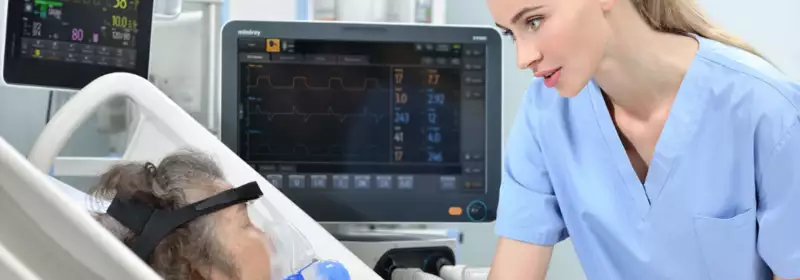
If you work in a second-line hospital setting, you are more likely to have the kind of career depicted in TV dramas, only hopefully without the drama.
Your days can (and will) be long, and you’ll be required to wear many hats. Chief among them will be a patient advocate and support to doctors.
You will need to know everything there is to know about a patient, from their condition to what medication they took and when.
You will be asked to run scans, perform minor procedures, take blood and care for the patients. All at the same time.
Mental health nurses, on the other hand, are responsible for planning and providing support and nursing care for individuals with mental health issues.
These issues can range from severe disorders to more common anxiety and depression. As part of a mental health team, you will work with professionals and medical staff, including social workers and therapists.
Together you will work on care requirements, supporting the individual and their family, administer medication and develop care plans.
These are just two of the specialist areas you can train in once you qualify as a nurse. While your core training will be the same as that of any other nurse, your career can diverge significantly.
But with that comes a fantastic opportunity to learn and develop a unique set of skills, allowing you to help people the best way you can.
How to start your training
To be a nurse, you need to complete an undergraduate degree in nursing or a postgraduate diploma. This is a requirement, and while there is more than one way to get onto a course, you cannot become a nurse without one of those qualifications.
Minimum requirements to get onto a nursing course vary as universities are able to set their own entry requirements. However, the minimum requirements are usually GCSEs in English, maths and the sciences, all grade C/5 or above.
They will also most likely ask for at least two A-Levels one of which must be in a relevant area of study. This can include biology, chemistry, sociology, and psychology. Although again, universities can pick and choose what counts as relevant.
Equivalent qualifications at Level 3, SQAs and Scottish Wider Access Programme certificates are also accepted.
There may be some flexibility on entry requirements if you have relevant work or voluntary experience and/or qualifications in related fields.
These students will often be offered a place on a foundation course, which is a year of study, to bring them up to scratch ahead of a full degree.
This gets you into university sooner but adds a full year and a full year of tuition fees onto your studies.
However, if you lack formal qualifications – or the relevant qualifications – you have options.

Access to HE Diploma (Nursing)
The Access to Higher Education Diploma (Nursing) is designed specifically to prepare students for study as an undergraduate in nursing at university. The Access to nursing diploma is suitable for anyone wanting to study a nursing degree who lacks the relevant qualifications.
Access to HE Diplomas are recognised by almost all universities in the UK. They are also a nationally recognised qualification so employers will accept them too.
If you don’t have the relevant A-Levels to make it on to a nursing course, then the Access to nursing course will give you the knowledge and the qualification.
The Access to HE Diploma (Nursing) focuses specifically on teaching you everything you need to know ahead of studying your degree.
The learning is highly focused on giving you the best possible start. During the course of your studies, you will learn about:
-
dementia
-
the endocrine system
-
infection and immunity
-
the structure and function of cells
-
healthcare communication
-
professional behaviours and multidisciplinary teams
-
the human musculoskeletal system
-
health promotion
-
mental health and coping strategies
-
the nervous system
-
numeracy in a health context
In your Access to nursing course, you will also explore equality, diversity and inclusion within healthcare settings, as well as poverty in contemporary Britain.

Returning to Practice
Any nurses wishing to return to practice may do so, but they are required to take a refresher course. Depending on how long it has been since you last practised, it could take between 3 and 12 months.
Nursing Degree Apprenticeships
Nursing Degree Apprenticeships offer a flexible route into nursing. The course takes 4 years and requires you to complete a nursing degree while learning on the job.
You will still need at least a Level 3 qualification as you will be studying at degree level. So if you lack A-Level qualifications (or equivalent), then an Access to Higher Education Diploma is your best bet.
The only real challenge is finding someone willing to take you on as an apprentice.
Access to Higher Education Diplomas can usually be studied via distance learning providers too, so you can study when it suits you.
All you need to do is enrol on your Access to HE Diploma in nursing and start learning right away.
Get in touch with our sales team or sign up today online. There are flexible payment terms available to help you spread the cost.
You will also have access to a dedicated tutor who will help you through the Access course process. Check out our blog for useful tips on how to get the most out of your study experience.
Click below to read why you should study your Access to HE Diploma in nursing with learndirect today.