
Chemistry is a diverse and interesting field of study that has helped us make vast scientific breakthroughs throughout time.
Humans have been studying the principles of Chemistry for thousands of years. From when our early ancestors first understood how to use controlled fire, we have continually developed our understanding of chemical reactions.
Modern-day study of Chemistry enables us to understand the world around us through exploring atoms, molecules and ions. The knowledge that has been gained through research has allowed us to create vaccines, insulin, plastic and much more.
Studying GCSE Chemistry develops your understanding of the core principles of Chemistry. Because of this, you’ll be able to confidently take your studies further through A Levels and beyond.
Not only will you receive a nationally recognised qualification, but you’ll be exploring a fascinating area of study. The course will also develop your analytical and critical thinking skills that will benefit you personally and professionally.
What you’ll learn
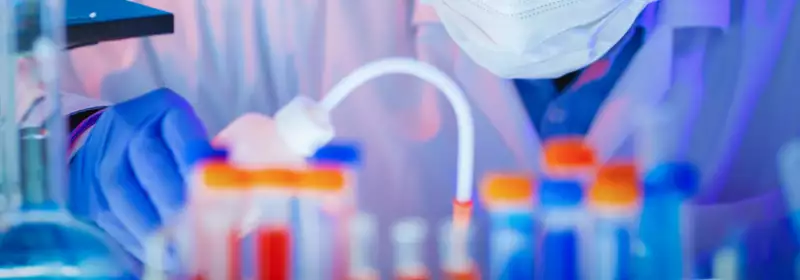
GCSE Chemistry will help you gain a foundational understanding of the core elements of the subject. This is ideal if you’d like to continue your learning further and eventually secure a job role in the exciting world of Chemistry.
Through your studies, you’ll explore chemical changes and what those substances are then used for—whether that’s creating metal, plastic, or modern medicine.
You’ll also learn how to analyse and evaluate research and experiments effectively. This will prepare you academically for further education at A-Level and university. You'll look at the differences between organic chemistry and inorganic chemistry, what their key components are, and how they’re used.
By the end of the course, you’ll be able to confidently explain the fundamentals of Chemistry and demonstrate your knowledge in an exam or practical setting.
The Modules You Will Study
Your course is broken down into a clear, structured pathway. During your studies, you will cover the following units in detail:
Course Introduction and Online Study Guide
These units cover all the information you need about GCSE and iGCSE Chemistry. They also include guidance on how to get the most out of your course and how to successfully study online.
Introduction to Science - Chemistry
Upon completion of this module, you will have a better understanding of the principles of Chemistry and the course you are enrolled on.
Atomic Structure and the Periodic Table
This unit covers the basis of Chemistry, including atoms, elements, compounds, and the Periodic Table.
Bonding, Structure, and the Properties of Matter
This unit covers chemical bonding and the structure of matter, including ionic, covalent, and metallic bonding.
Quantitative Chemistry
This unit covers how we measure and calculate chemically.
Chemical Changes
In this unit, you will cover changes to matter in more detail.
Energy Changes
This unit looks at changes in energy from a chemical perspective.
The Rate and Extent of Chemical Change
Building on what you learned in Unit 8, this unit enables you to understand the rate and extent of chemical changes.
Organic Chemistry
This unit covers organic Chemistry, including crude oil, hydrocarbons, and alkanes.
Chemical Analysis
Here, you will learn how to analyse and identify matter.
Chemistry of the Atmosphere
This unit covers what you need to know about the atmosphere in which we live.
Using Resources
This unit covers the resources we have on Earth, including sustainable development and potable water.
Your course is rounded off with a full set of mock exams to make sure you are confident and fully prepared for your final assessments.

Why Study GCSE Chemistry?
GCSE Chemistry could be your initial step towards exciting professions. Although the qualification alone won’t be enough to become a fully qualified scientist it can set you up for success.
Studying a GCSE teaches you the fundamentals in that subject to build upon at A Level and beyond. With your foundational knowledge you’ll find transitioning into A Level Chemistry much smoother.
If you choose to continue your studies, you could be work amongst brilliant minds in various industries. Job roles you could find yourself in include:
- Analytical Chemist
- Chemical Engineer
- Chemistry Teacher
- Forensic Scientist
- Geochemist
- Hazardous Waste Chemist
- Materials Scientist
- Pharmacologist
- Toxicologist
- Water Chemist
Within these interesting and evolving professions, you could be working at the forefront of new scientific discoveries. And working with some of the most cutting-edge technology too. You’ll need to carry on your studies to university standard to get into professions such as these.

Getting into University
If you’re considering studying a chemistry-related degree at university then you’ll need more than GCSE Chemistry. Universities can set their own requirements so each course may differ slightly so it’s important to check before enrolling.
Most universities will ask for 5 GCSEs in English, maths and the sciences too. As well as 2/3 relevant A Levels or an Access to HE Diploma (Science).
The Access to HE Diplomas are an alternative to A Level study that negates the need for multiple courses. Instead, you’re able to just take the one relevant course before applying to university.
No matter what stage you’re at in life it’s never too late to get back into education and realise your ambitions. GCSE Chemistry could give you the knowledge and confidence you need to pursue your ideal career.
Whether that’s becoming a toxicologist or a chemistry teacher, it’s still possible to reach your goals at any age.
Studying GCSEs from home
Online learning providers are held to the same standard as physical colleges when offering GCSEs. This is because GCSE qualifications must be regulated by Ofqual regardless of who provides them.
The Office of Qualifications and Examinations Regulation (Ofqual) regulates qualifications, examinations and assessments in England. They ensure the quality of the learning is maintained across the board.
Studying for your GCSE online also allows you to engage with your learning whenever suits you. So you won’t have the logistical nightmare of trying to rearrange your schedule to attend classes.
You’re able to enrol online, log in and begin learning at a pace and place that’s right for you. Whether you want to blitz through the coursework in 6-months or take the full two years, it’s up to you.
On average, online students complete their GCSEs in 9 months. However, it’s important to take into account your exams too.
Exams are usually held in May/June each year and are essential to complete your qualification. So make sure to set yourself a realistic goal when planning your study sessions.
A dedicated and experienced tutor will support your learning and help you prepare for your exams. They’ll provide you with constructive feedback and extra assistance where needed.
Whatever your plans are for the future, studying GCSEs is a good start. They are a nationally recognised qualification that will allow you to work towards university. Whether that’s through an Access to HE Diploma or A Level study.
learndirect is one of the UK’s leading online learning providers. With a variety of GCSEs to choose from to help you realise your ambitions. We offer flexible payment options and tutor support throughout your learning.
To learn more about how to prepare for your online learning journey read our blog here.
If you’re ready to get back into education get in touch or enol online today. Alternatively, download our FREE GCSE Faculty Brochure for more information below.